
Introduction
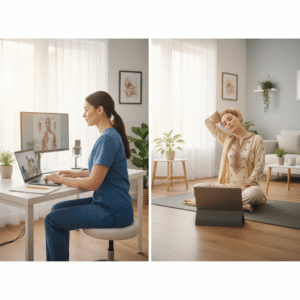
The world has shifted toward digital healthcare—especially after COVID-19—and physiotherapy is no exception. Today, Virtual Physiotherapy, also known as Tele-Physio or Online Physiotherapy, is becoming a preferred option for people who want expert guidance without visiting a clinic.
But the big question is: Does remote physiotherapy actually work?
Research says yes—when done correctly, virtual physiotherapy can be just as effective as in-person treatment for many conditions.
In this blog, we explore how virtual physiotherapy works, its benefits, limitations, and who can benefit the most.
What Is Virtual Physiotherapy?
Virtual physiotherapy involves:
Online video consultations
Guided exercise sessions
Condition assessments via video call
Real-time posture correction
Personalized home exercise plans
Digital follow-ups and monitoring
All of this is done through platforms like Zoom, WhatsApp, Google Meet, or dedicated telehealth apps.
Does Virtual Physiotherapy Really Work?
Yes. Studies show that tele-physiotherapy is effective for many musculoskeletal and neurological conditions.
Online physiotherapy works because:
Pain and mobility issues can be assessed visually
Most treatments involve exercise—not machines
Patients receive real-time guidance
Therapists can track progress through digital tools
It promotes consistency and accountability
For many patients, outcomes improve due to better adherence to home exercise programs.
Conditions That Respond Well to Online Physiotherapy
Virtual treatment is effective for:
1. Neck & Back Pain
One of the most common reasons patients seek online physio.
Guided exercises, ergonomics corrections, and posture training give excellent results.
2. Shoulder & Knee Pain
Strengthening and mobility routines are easy to teach over video.
3. Posture Issues
Therapists can evaluate posture through the camera and guide corrections instantly.
4. Sports Injuries
Rehabilitation exercises can be demonstrated and supervised virtually.
5. Post-Surgical Recovery
For surgeries like ACL, rotator cuff, or joint replacements, online sessions support safe home recovery under supervision.
6. Chronic Pain Conditions
Including arthritis, fibromyalgia, and recurrent muscle tension.
Benefits of Virtual Physiotherapy
✔ Convenient & Time-Saving
No travel, no waiting time—ideal for busy schedules.
✔ Accessible Anywhere
Perfect for patients in remote areas or those who lack access to quality physiotherapy clinics.
✔ Cost-Effective
Online sessions are often cheaper than in-person appointments.
✔ Comfortable Home Environment
Patients feel more relaxed and confident exercising at home.
✔ Improved Adherence
Physios can monitor and follow up more frequently, improving treatment consistency.
✔ Safe for High-Risk Patients
Especially important for patients who prefer minimal exposure to crowded clinics.
How Do Therapists Assess Patients Online?
Physiotherapists use:
Visual movement screening
Range-of-motion tests
Posture analysis
Patient history & symptom discussion
Functional tasks (sitting, walking, lifting arms, bending)
Therapists can accurately diagnose most musculoskeletal problems this way.
What a Typical Virtual Physio Session Looks Like
Video call assessment
Discussion of pain & medical history
Movement analysis via camera
Demonstration of exercises
Real-time feedback & corrections
Prescription of a home exercise plan
Follow-up monitoring
All instructions are tailored specifically to the patient’s condition.
Limitations of Virtual Physiotherapy
While highly effective, online physio may not be ideal for:
Conditions requiring manual therapy only
Severe injuries needing physical testing
Acute trauma (fractures, dislocations, deep wounds)
Patients who struggle with technology
In such cases, a hybrid approach—online + clinic sessions—works best.
Is Virtual Physiotherapy Safe?
Absolutely. As long as:
You have a secure space to exercise
Your therapist gives proper guidance
You follow safety instructions
Virtual physio sessions are safe and effective for most people.
Who Should Consider Virtual Physiotherapy?
You should consider Tele-Physio if:
You’re too busy to visit a clinic
You live far from physiotherapy services
You prefer home-based recovery
You want expert guided exercises
Your condition mainly needs movement-based therapy
Conclusion
Virtual physiotherapy is not just a temporary online trend—it is a proven, effective, and convenient treatment option supported by evidence. Many patients experience the same outcomes as in-person physiotherapy, especially for posture issues, neck/back pain, joint problems, and sports injuries.
If you’re looking for safe, expert-guided treatment from home, virtual physiotherapy can be a highly effective solution.